Roof Leaks to Rusted Columns: Engineered Steel Column Repairs at a Houston Metal Distributor
155 columns inspected, 16 rebuilt, with the warehouse open for business
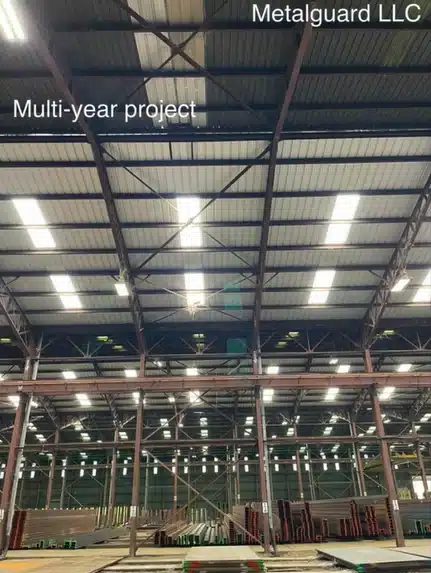
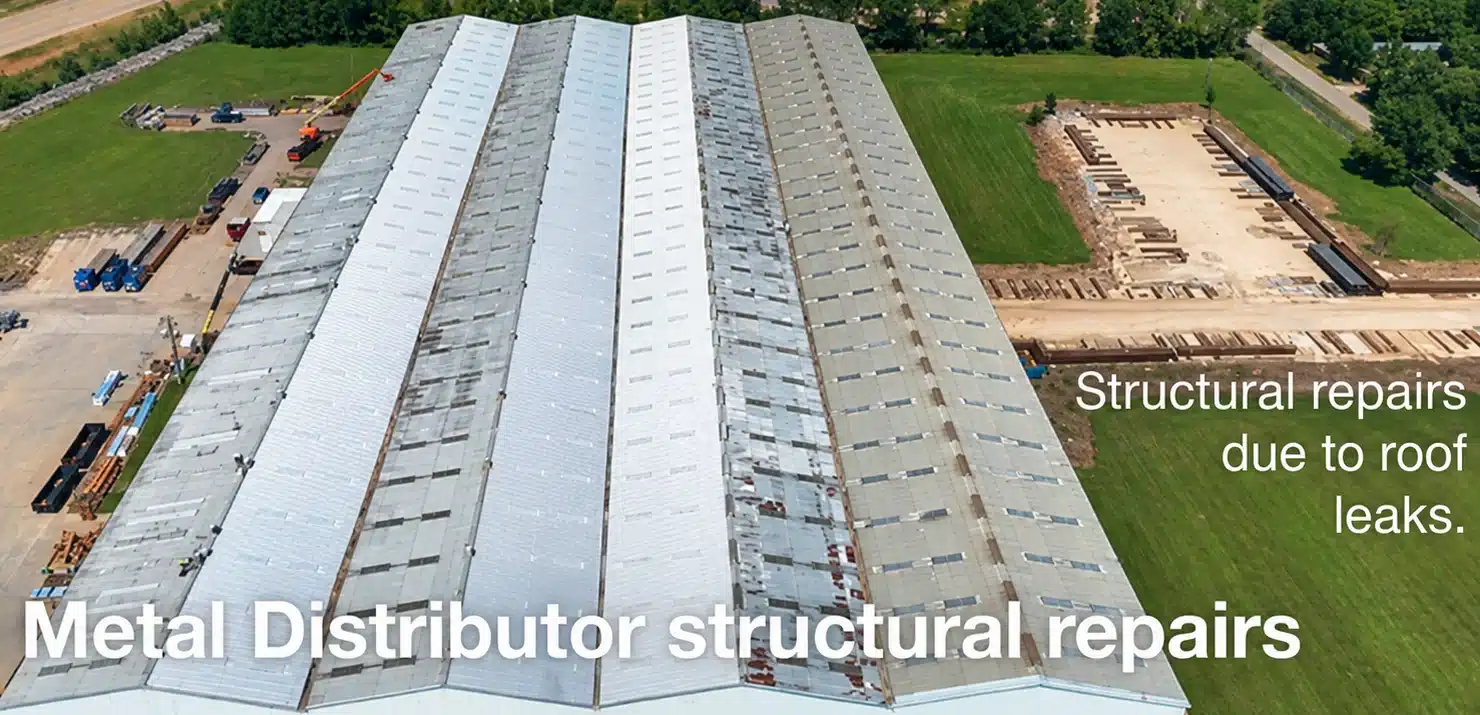
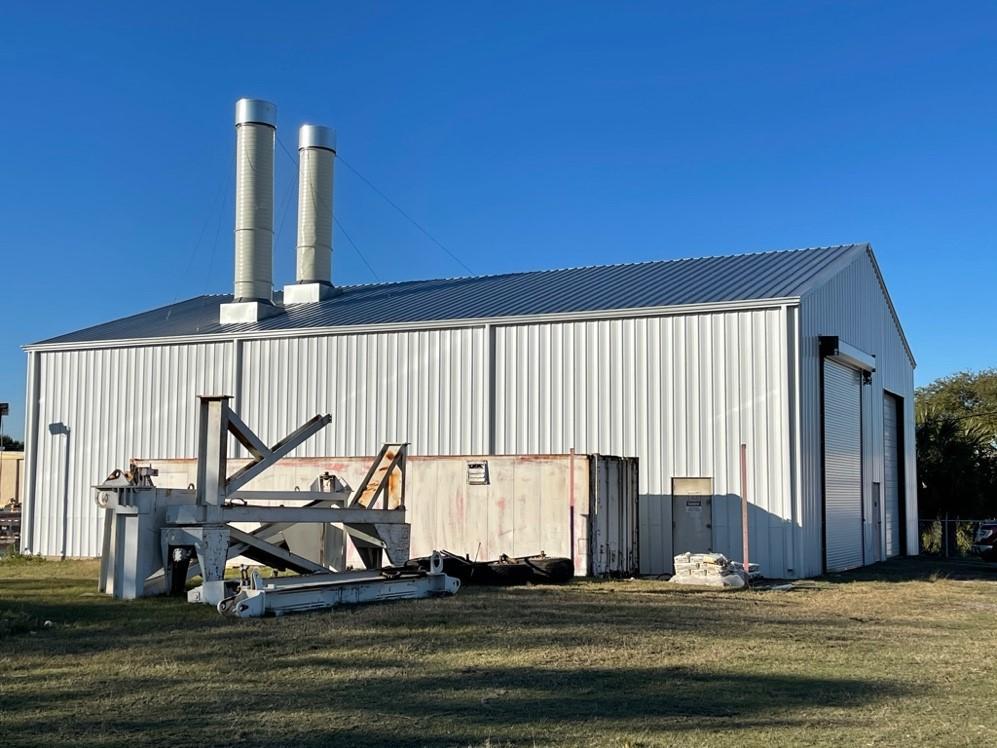
From 2024 to 2025, Metalguard repaired long-running roof-leak damage to the steel structure of a metal distributor’s warehouse in Houston, Texas. The crew first replaced the worst-leaking sections of the roof, then inspected all 155 steel columns in the building. Sixteen needed engineered repairs, and some had rusted completely through at the base. Using a shoring device designed by SMS Engineering, Metalguard cut out the corroded steel, welded in new sections, and primed and painted each repaired column while the warehouse stayed in operation.
The warehouse stayed open while Metalguard inspected 155 columns and repaired 16.
Location
Houston, TX
Scope
155 columns inspected · 16 rebuilt
Timeline
2024 to 2025
Project at a Glance
Facility: Metal distributor warehouse, Houston, Texas
Timeline: 2024 to 2025
Cause: Long-running roof leaks let water reach the steel columns
Roof work: The worst-leaking roof sections were replaced before any structural work began
Inspection: All 155 steel columns inspected; 16 needed repair
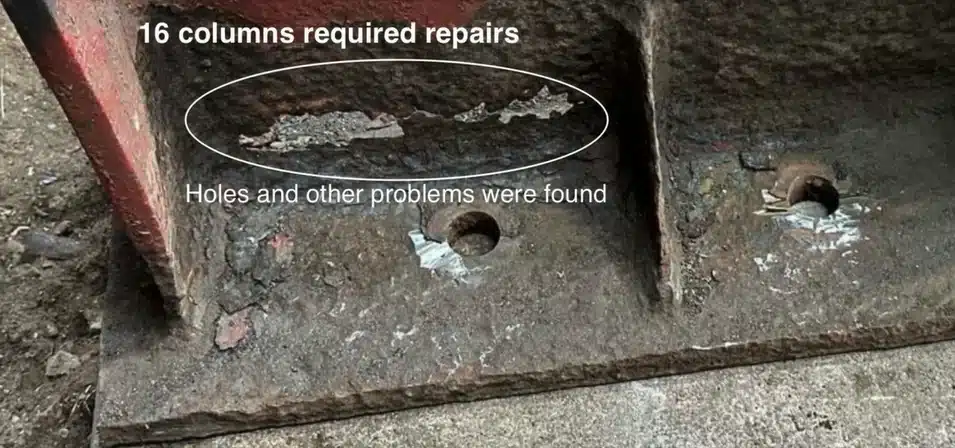
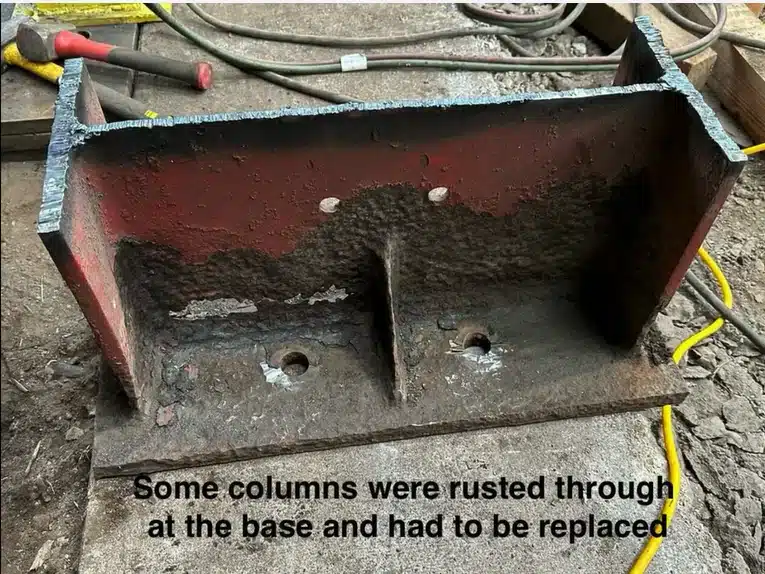
Damage: Holes, corrosion and rust-through at the column bases
Engineering: Column-specific repair details and a custom shoring device by SMS Engineering
Repair: Corroded steel cut out; new steel, both standard shapes and custom-fabricated pieces, welded in; X-bracing reattached; repaired columns primed and painted
Operations: The warehouse stayed open; daily logs kept the customer and engineer up to date
Roof Leaks and Inspection
How Roof Leaks Damaged the Columns
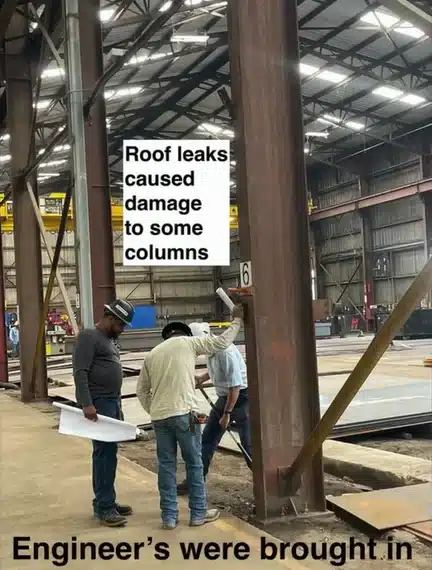
When a metal roof keeps leaking, the damage doesn’t stop at the ceiling. Water runs down the framing and collects at the bottom of the steel columns, where it keeps the steel wet and slowly rusts it away. In industrial buildings, chemicals and other corrosive material can speed that up. At this warehouse, persistent leaks had left some columns with holes and others rusted through at the base.
The worst-leaking roof sections were replaced before the column work began.
Step 01
Step 1: Stopping the Roof Leaks First
Repairing the columns while the roof still leaked would have let the same water start the damage over again. So Metalguard began by replacing the most damaged sections of the roof, cutting off the main source of moisture before any structural work started. See Metalguard’s metal roof repair and replacement and leak repair services.
Step 02
Step 2: Inspecting All 155 Columns
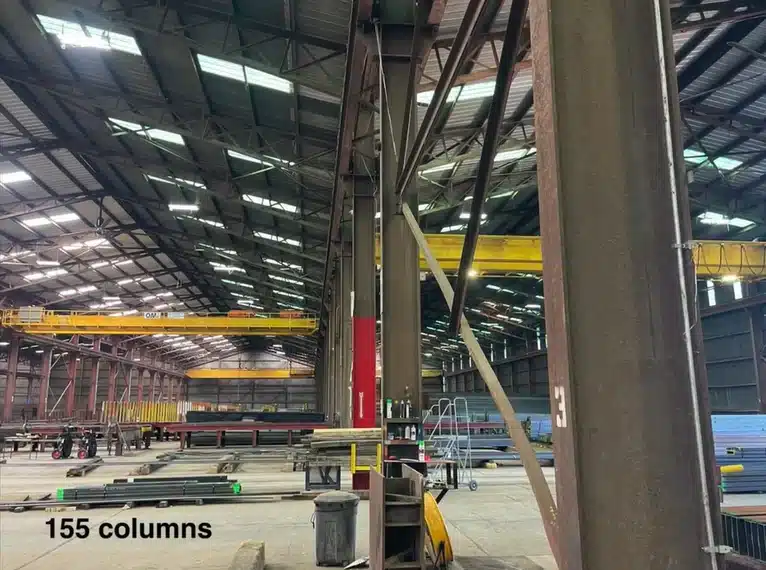
With the worst leaks stopped, Metalguard and SMS Engineering inspected every one of the building’s 155 steel columns. A column can look sound from a few feet away and still have lost much of its steel at the base, so the inspection covered every column, not just the ones that looked damaged.
The inspection found 16 columns that needed repair. The damage ranged from holes and localized corrosion to columns that had rusted completely through at the base.
What is structural steel corrosion? Corrosion is steel breaking down through a chemical reaction with its surroundings, and rust is the visible result. As it spreads, the steel loses material, and with it the thickness it needs to carry loads.
Why are column bases so important? The base of a column passes the weight of the roof and framing down into the foundation, through the column, the base plate, the anchor bolts and the concrete. Water collects at floor level, so bases usually corrode first. When a base loses strength, an engineer has to decide whether it needs reinforcement, partial steel replacement or a larger repair.
Engineers inspected every column in the building.
All 155 columns in the building were inspected.
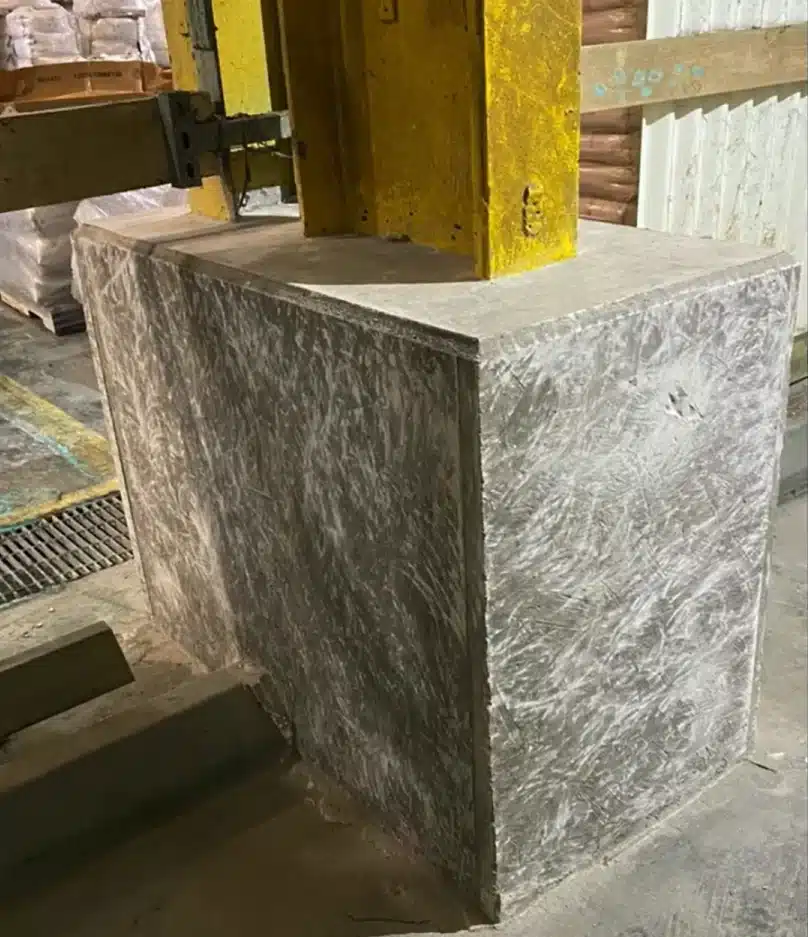
Holes at the base of one of the 16 columns that needed repair.
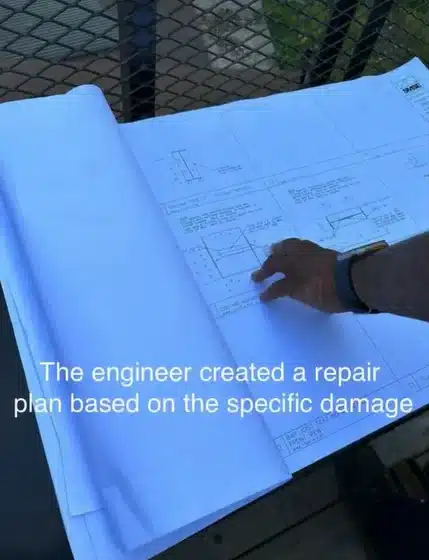
SMS Engineering created a repair plan for each damaged column.
Engineering
Step 3: Engineering a Repair for Each of the 16 Damaged Columns
No two of the 16 columns were damaged the same way. Some had small holes or localized rust, while others had lost much more steel near the base. So SMS Engineering drew up separate repair details for each column, spelling out the replacement steel, its dimensions and placement, and the welding and connection details needed to complete the repair. Metalguard built every repair to those plans.
What is an engineered structural repair? It’s a repair designed by a qualified structural engineer to correct a specific problem in a building component. The design has to restore the building’s load path: the route that forces travel from the roof and framing, down through the columns and into the foundation. Learn more about Metalguard’s engineered structural repairs.
Shoring
Step 4: Supporting the Building With Engineer-Designed Shoring
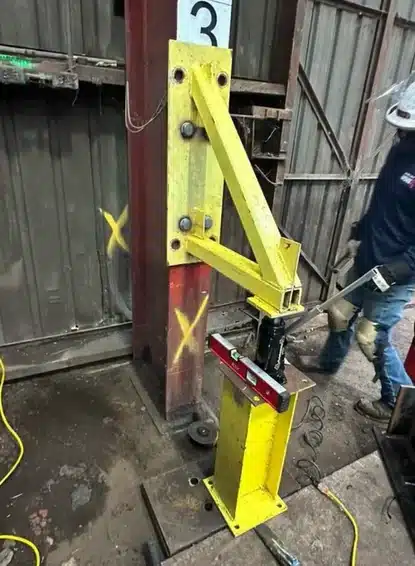
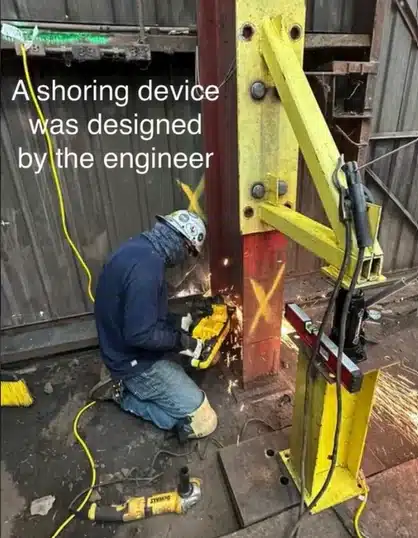
Cutting corroded steel out of a column means that column can’t carry its share of the roof until the new steel is in place. To hold the load in the meantime, SMS Engineering designed a custom shoring device for the job. Metalguard installed it at each column and carried out the repair to the engineer’s requirements.
Because the warehouse stayed open, each installation was also planned around access, work areas and the customer’s daily operations.
The engineer-designed shoring device holds the column while its base is repaired.
With the shoring in place, the crew could safely remove the damaged steel.
Some columns had rusted through at the base and needed new steel.
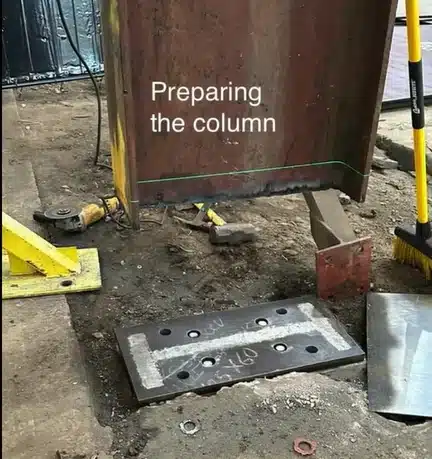
Preparing the column to receive new steel.
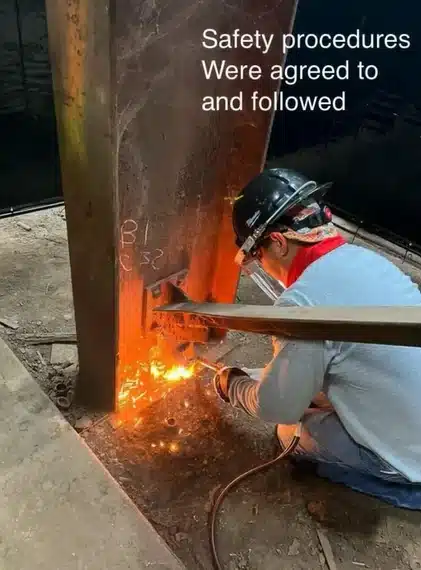
Cutting out the corroded steel.
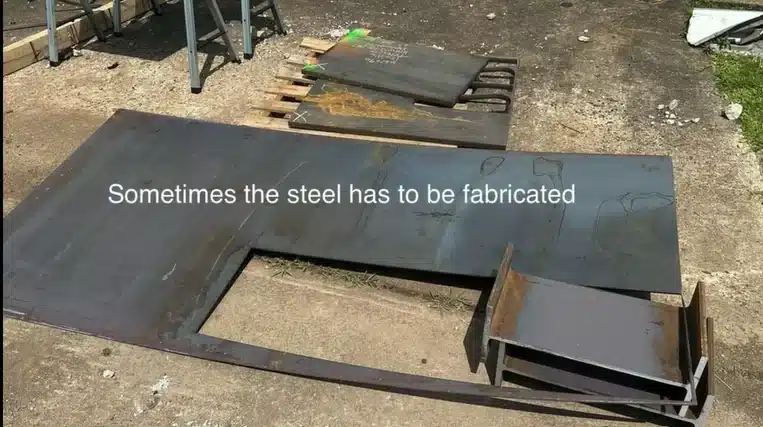
Some repairs called for custom-fabricated steel.
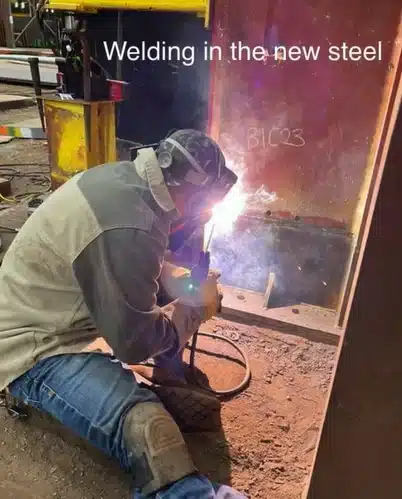
Welding in the new steel.
Steel Replacement
Step 5: Cutting Out Corroded Steel and Welding In New Sections
When rust eats all the way through a column, painting over it or covering it with a plate doesn’t put back the steel that’s gone. The damaged section has to come out.
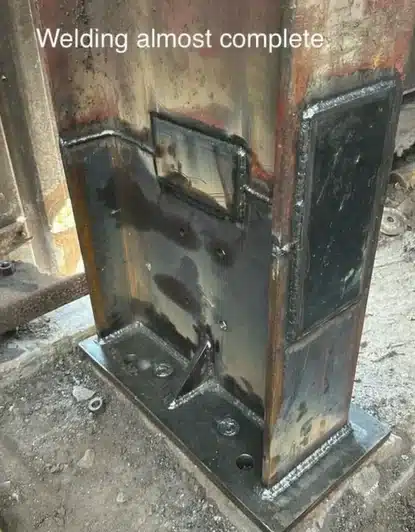
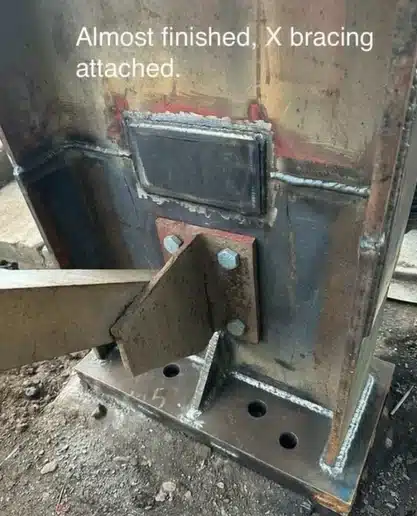
With each column shored, the crew prepared the base, cut out the corroded steel and fitted the replacement pieces. Some of the new steel came from standard structural shapes cut to length. Other columns needed custom-fabricated pieces made to match SMS Engineering’s specifications. Each piece was welded in place following the repair details for that column, and where X-bracing connected at the base, it was reattached as part of the repair.
Welding nearly complete.
Nearly finished, with the X-bracing reattached.
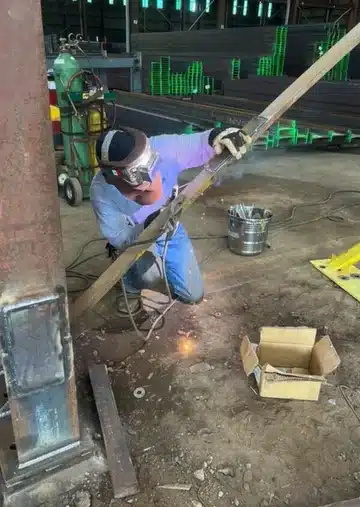
Final fit-up at a repaired column.
Painting
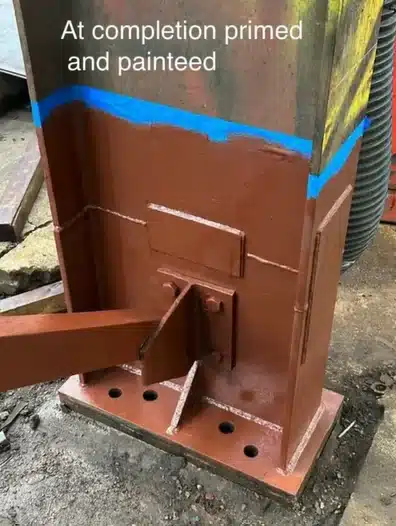
Step 6: Priming and Painting the Repaired Columns
Once the structural work was done, the repaired columns were primed and painted. A good coating protects the new steel, which sits right where water would collect again if a leak ever came back. See Metalguard’s painting services.
A finished repair, primed and painted.
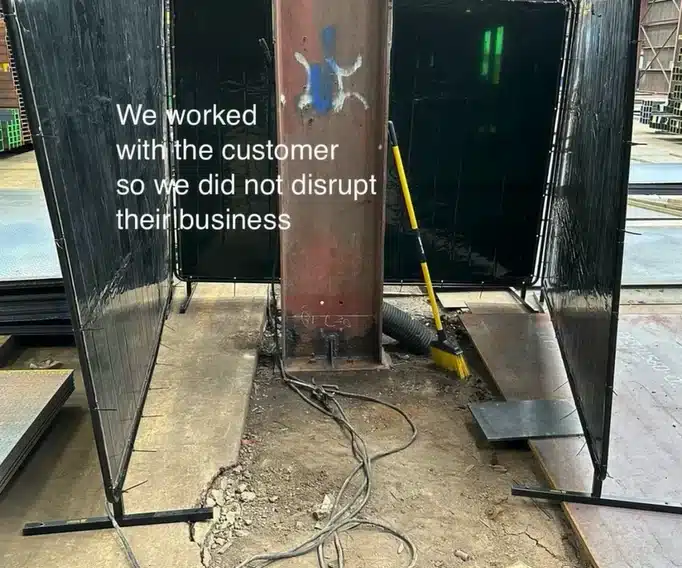
Screened work areas kept the repairs separate from daily operations.
Operations
Keeping a Working Warehouse Open During Structural Repairs
The distributor needed the warehouse to keep running throughout the project. Metalguard planned the repairs with the customer to keep disruption to a minimum, coordinating work areas, access and the order of the work around the facility’s needs.
Safety procedures were agreed with everyone involved before work began and followed throughout. Daily logs served as a shared record for the customer and SMS Engineering, so everyone could see what was happening and what came next. Read more about Metalguard’s safety program.
Between 2024 and 2025, Metalguard stopped the worst roof leaks, inspected all 155 columns and rebuilt the 16 that were damaged, each to SMS Engineering’s design. The replaced roof sections keep water off the repaired steel, and the warehouse stayed in business the whole time.
If your building has had roof leaks for a long time, have the columns below them checked. Catching corrosion early can mean a smaller repair than cutting out and replacing steel.
FAQ
Roof Leak and Steel Column Repair FAQs
Can roof leaks damage a building’s steel columns?
Yes. Water from a long-running leak runs down the framing and collects at the column bases, where it rusts the steel. At this Houston warehouse, persistent leaks left 16 of the building’s 155 columns in need of structural repair.
How can I tell if roof leaks have damaged my columns?
Look for rust streaks running down a column, water or debris collecting at the base, flaking or layered rust, holes in the steel, and rust around the base plate and anchor bolts. If you see any of these, have the columns inspected.
Why fix the roof before repairing the columns?
Repairing steel while water still reaches it lets the corrosion start again. On this project, Metalguard replaced the worst-leaking roof sections first, then moved on to the columns.
How do you decide whether a column needs repair?
A structural engineer looks at where the damage is, how much steel is left and what load the column carries. Here, all 155 columns were inspected, and 16 received repairs designed by SMS Engineering.
Can a column that has rusted through at the base be repaired?
Often, yes. The corroded section is cut out and new steel is welded in to the engineer’s details while the column is supported by shoring. Paint or a cover plate alone won’t restore steel that’s gone.
What is shoring, and why is it needed for column repairs?
Shoring is temporary support that carries a column’s load while part of it is removed. On this project, SMS Engineering designed a custom shoring device to hold each column while its base was replaced.
Can my building stay open during structural column repairs?
Yes. This warehouse stayed in operation throughout the project. Metalguard planned work areas, access and the order of the work with the customer, and kept daily logs so the customer and engineer always knew what was happening.
Can Metalguard repair both the roof and the structural steel?
Yes. On this job, Metalguard replaced the leaking roof sections and then repaired the damaged columns, so one contractor handled both the cause and the damage. See metal roof repair and replacement.
What is a load path, and why does it matter in a repair?
The load path is the route forces take from the roof and framing, down through the columns and into the foundation. A structural repair has to restore that path, which is why each column on this project was repaired to an engineer’s specific details.
A leak that has been running for months may already be affecting your steel. Send Metalguard photos of the leak and the column bases near it, and we’ll tell you the next step, whether that’s a roof repair, an engineer’s inspection or both. Call 713-449-3430.