Chemical Plant Column Repairs: Rebuilding 10 Corroded Steel Column Bases in Houston
In 2022, Metalguard repaired 10 corroded steel column bases at the Cosaco chemical plant in Houston, Texas. Moisture and chemical-laden debris had built up around the columns and eaten into the steel at floor level. Working from repair details by SMS Engineering, the crew ground each column to clean steel, welded on studs, anchored new rebar into the existing slab with epoxy, and cast a reinforced concrete base around every column, all inside the operating plant.
Problem: Severe corrosion at 10 steel column bases; the roof trusses were inspected and needed no repair
Engineering: Column-specific repair details by SMS Engineering, with inspections at each stage of the work
Repair: Steel ground clean, welded studs, epoxy-anchored rebar, rebar cages and new reinforced concrete bases
Constraints: Conventional shoring wasn’t practical, existing X-bracing had to stay in place, and some wall sections were removed for access
Safety: Job Safety Analyses and work permits posted; daily progress logs shared in Buildertrend with the engineer and the customer
Why the Columns Needed Repair
Why the Column Bases Needed an Engineered Repair
Chemical exposure, moisture and debris had built up around the bottom of the plant’s structural steel columns. By 2022, corrosion at 10 of the column bases was severe enough to raise real questions about whether the building’s supports could still carry their loads.
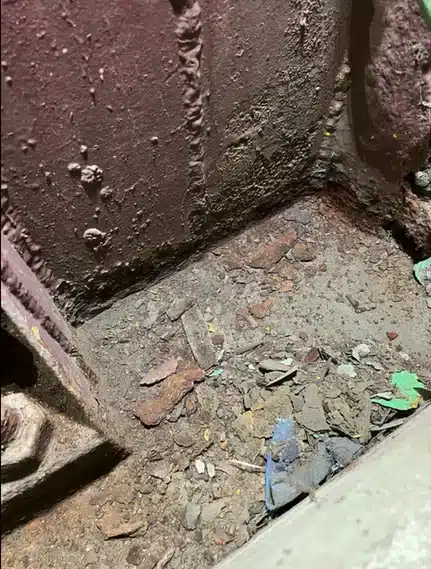
Debris and chemical residue trapped moisture against the steel.
The Cause
How Debris Causes Column Base Corrosion
Dirt, debris and chemical residue that pile up around a column hold moisture against the steel. In a chemical plant, that residue can also contain caustic compounds that eat through the steel’s protective coating and speed up rust. The steel slowly loses thickness, and with it the strength to support the building. Because the damage happens at floor level, often under the buildup itself, it can go unnoticed until it’s advanced.
Assessment
Assessing the Structural Damage
Metalguard worked with SMS Engineering to inspect the building’s columns and roof framing. The engineer found that the roof trusses didn’t need repair, which let the work focus on the column bases. Once the bases were cleaned off, the engineer documented each damaged column and issued repair details tailored to its condition and connections. That column-by-column approach kept the repair to the steel that actually needed it. See how Metalguard handles roof and structural inspections.
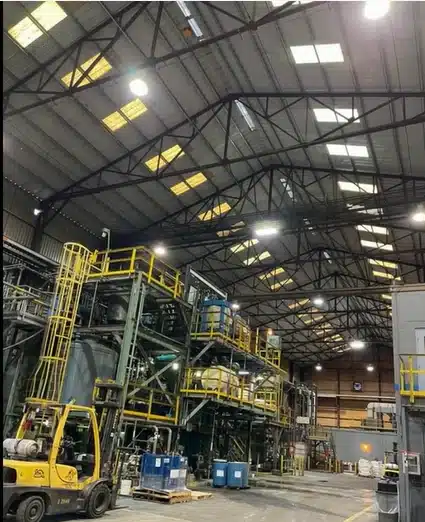
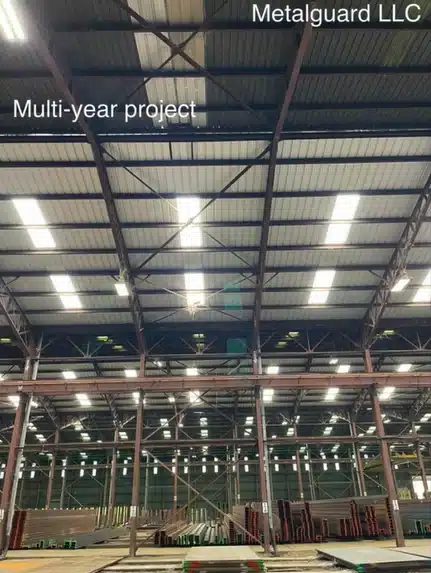
The roof trusses were inspected and needed no repair.
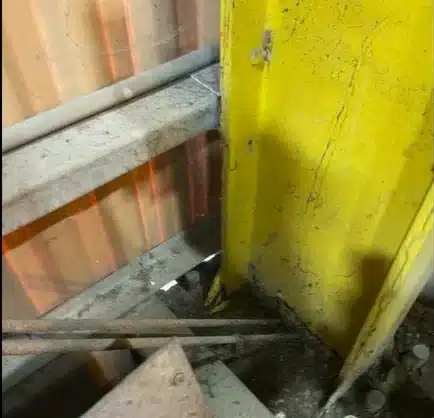
The X-bracing stayed in place throughout the repair.
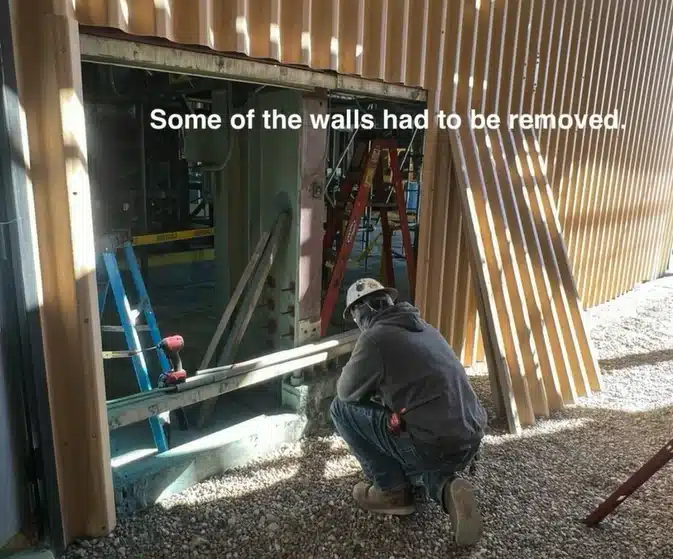
Some wall sections were removed to reach the columns.
Site Constraints
Working Around Plant Conditions
Why Conventional Shoring Wasn’t an Option
The usual way to repair a damaged column is to shore it, or support it temporarily, while the work is done. Here, the columns couldn’t be shored the conventional way without disrupting the surrounding structure. So SMS Engineering designed a repair that reinforces each column base in place and builds a new concrete base around it, keeping the need for temporary support to a minimum.
Keeping the X-Bracing in Place
X-bracing, the diagonal steel that keeps a metal building from racking under wind and other sideways forces, ran through several of the work areas. It had to stay in place, so the crew planned each repair sequence around it.
Removing Wall Sections for Access
Some column bases sat behind wall panels, so Metalguard removed sections of the wall to reach them. Learn more about metal wall panel repair and replacement.
Safety & Oversight
Safety Planning and Engineering Oversight
Each column location came with its own access and safety challenges, so planning happened one column at a time. Job Safety Analyses were completed, posted and shared with the crew, and the required work permits were posted at each work area. Read more about Metalguard’s safety program.
The team kept daily project logs in Buildertrend so SMS Engineering, Cosaco and Metalguard management could all follow progress. The engineer inspected the repairs at each stage to confirm they matched the engineered details.
Each standard repair followed the same five steps, built to SMS Engineering’s details.
Step 01
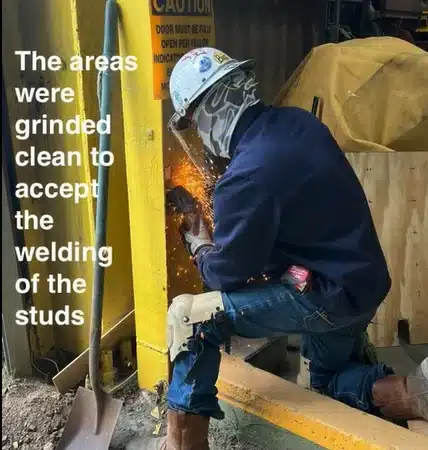
Step 1: Grind the Steel Clean
The crew ground the damaged areas of each column down to clean steel, removing rust, corrosion and surface contaminants. Clean steel is needed for sound welds, and it also shows how much material is left.
Each column was ground to clean steel to accept the welded studs.
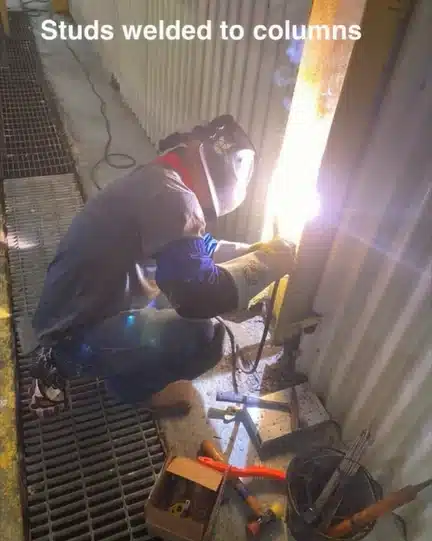
Studs were welded to each column per the engineered repair plan.
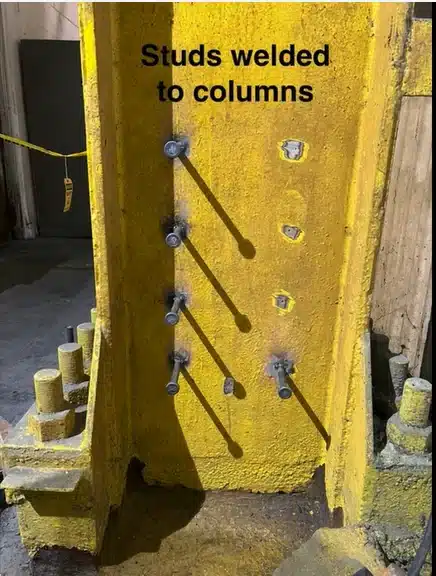
The welded studs tie the column into the new concrete base.
Step 02
Step 2: Weld Steel Studs to the Column
Steel studs were welded directly to each column as the repair details specified. The studs anchor the column into the new concrete, so the steel and concrete work together as one structural assembly. The finished welds were primed and painted.
Step 03
Step 3: Anchor Vertical Rebar With Epoxy
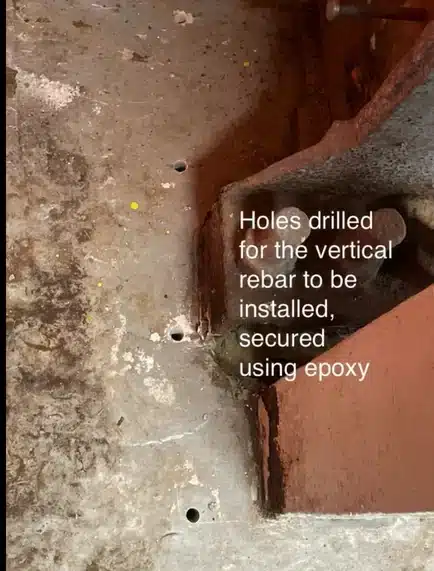
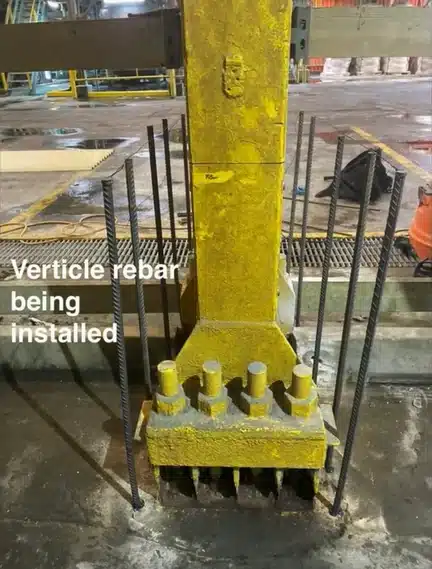
The crew drilled holes into the existing concrete and set vertical rebar in structural epoxy. Epoxy anchoring bonds the new reinforcement to the existing slab without tearing it out.
Holes drilled for the vertical rebar, which was set in structural epoxy.
Vertical rebar going in around the column base.
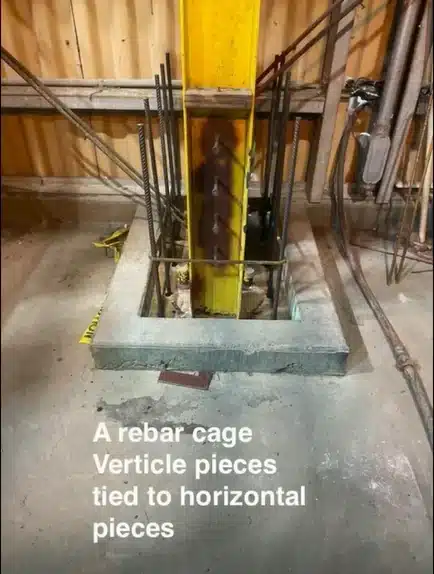
Vertical bars tied to horizontal bars form the cage.
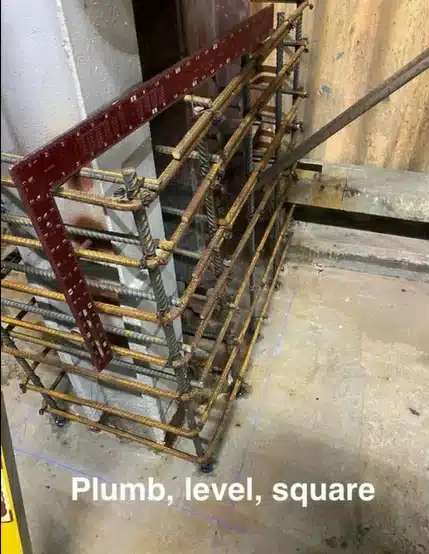
Every cage was checked for plumb, level and square before the pour.
Step 04
Step 4: Build and Square the Rebar Cage
Horizontal bars were tied to the vertical bars to form a reinforcing cage around each column. Before any concrete went in, the crew checked that every cage was plumb, level and square, with the bars straight and evenly spaced, so the steel would sit where the engineered design called for it.
Step 05
Step 5: Form and Pour the Concrete Base
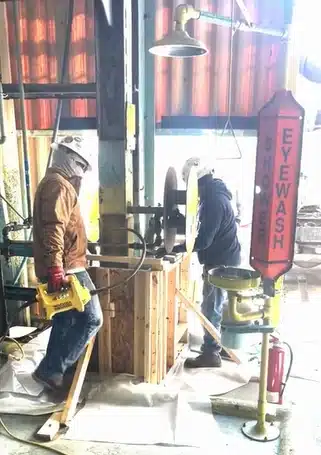
The crew built a wooden form around each rebar cage to the shape and size in the repair design, then poured concrete to fully surround the cage and the bottom of the column. The new reinforced base adds support at the column’s foundation and keeps moisture and corrosive material off the repaired steel.
Wooden forms shaped each base to the engineered dimensions.
Exception Repairs
Exception Repairs: When a Column Needed a Different Fix
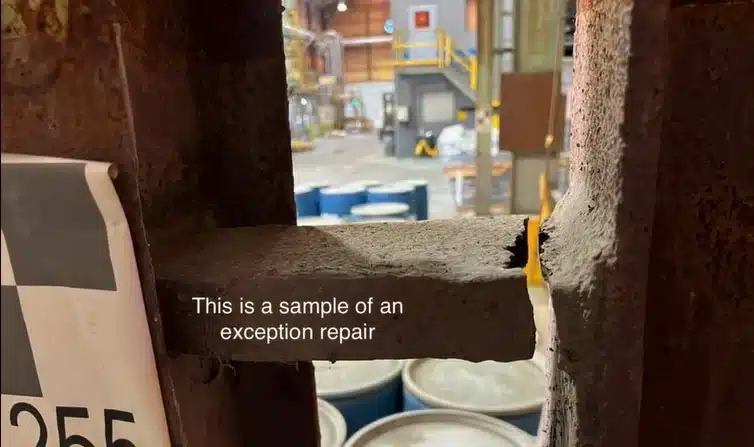
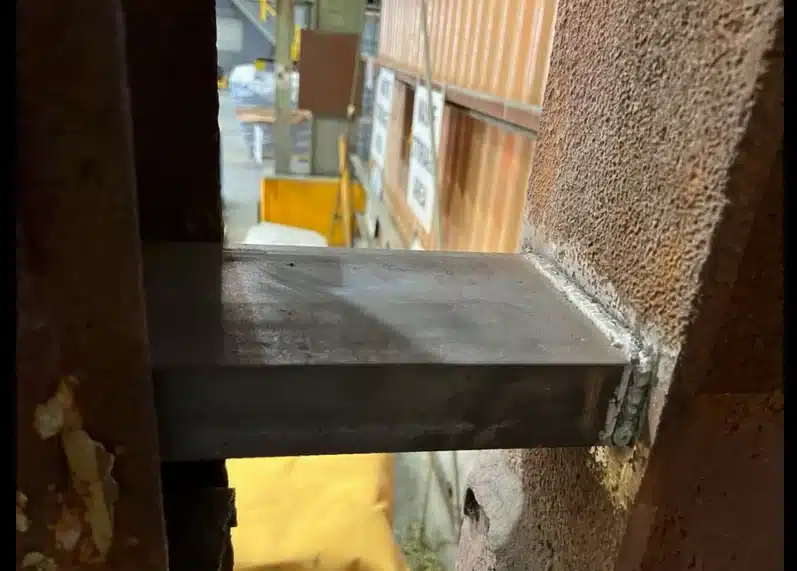
Not every column fit the standard repair. Where a column’s damage called for a different approach, SMS Engineering specified a separate repair for that location, and Metalguard carried it out in the field while preserving as much of the existing structure as possible. The before-and-after below shows one of those repairs.
Before
After
One of the exception repairs, before and after.
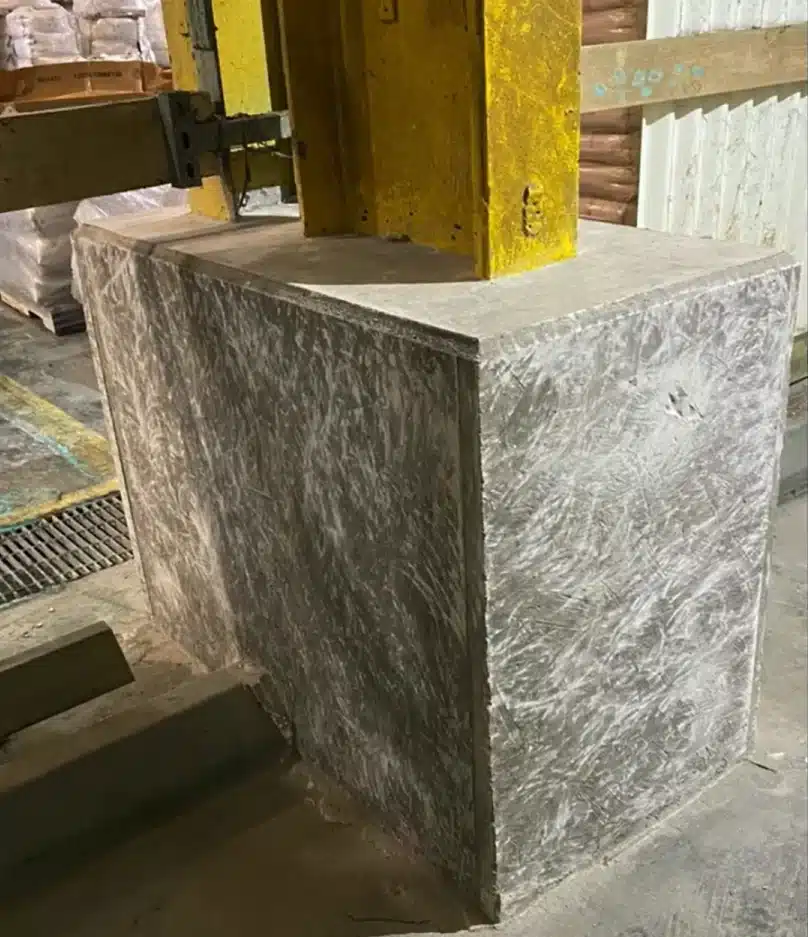
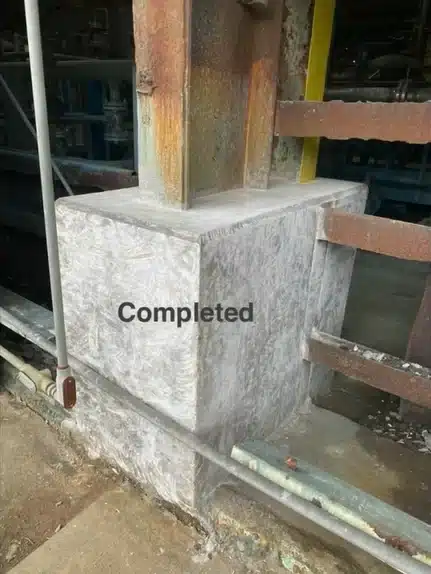
A completed column base.
The Result
The Result
All 10 column bases were rebuilt to SMS Engineering’s details, with the engineer inspecting the work at every stage. Each column now sits in a reinforced concrete base that restores support at the foundation and keeps debris, moisture and chemical residue off the repaired steel. The work was done inside the operating plant, around existing bracing and equipment, without relying on conventional shoring.
What causes steel columns to corrode in a chemical plant?
Moisture, chemical residue and debris that collect around the column bases. The buildup holds corrosive material against the steel, which breaks down its coating and steadily reduces its thickness and strength.
What are the signs of corrosion at a steel column base?
Flaking or layered rust, pitting, rust bleeding around the base plate, cracked grout, and debris or standing water around the column. Visible holes in the steel mean it’s time for an engineer’s assessment right away.
Can corroded steel columns be repaired instead of replaced?
Often, yes. A structural engineer evaluates how much sound steel is left and designs a repair to match. At the Cosaco plant, SMS Engineering’s plan reinforced the existing column bases in place instead of replacing the columns.
How do you reinforce a corroded steel column base?
On this project, Metalguard ground the steel clean, welded studs to the column, anchored vertical rebar into the slab with epoxy, tied a rebar cage, and poured a reinforced concrete base around each column. The right method for any column depends on the engineer’s assessment.
Why couldn’t the columns be shored during the repair?
The columns couldn’t be supported with conventional shoring without disrupting the surrounding structure. Instead, the engineer designed a repair that reinforces each base in place, which kept the need for temporary support to a minimum.
What is epoxy-anchored rebar, and why is it used?
It’s reinforcing steel set into holes drilled in existing concrete and bonded with structural epoxy. It ties new reinforcement to the existing slab without tearing the slab out, which is how the new concrete bases at Cosaco were connected to the floor.
Can column repairs be done inside an operating plant?
Yes. The Cosaco repairs were done inside the operating chemical plant, with Job Safety Analyses and work permits posted at each work area and daily progress logs shared with the customer and engineer. Learn more about Metalguard’s plant services.
Does every damaged column need the same repair?
No. Each column has its own level of corrosion and remaining strength. At Cosaco, SMS Engineering specified repairs column by column, and some locations needed a different fix from the standard concrete base.
Do you work with a structural engineer?
Yes. On this project, Metalguard built every repair to details from SMS Engineering, and the engineer inspected the work at each stage.
How can I keep column base corrosion from coming back?
Keep column bases clear of debris, fix leaks and drainage problems that keep the steel wet, inspect coatings regularly, and recoat damaged areas promptly. In chemical plants, choose coatings rated for the chemicals present. Metalguard offers industrial painting and coatings.
Column base corrosion gets worse the longer it sits. Send Metalguard photos of the affected columns and a short description, and we’ll tell you the next step, whether that’s an engineer’s assessment or a full repair. Call 713-449-3430.