
2025 Metal Building Trends That Cut Operating Costs (Facility Manager’s Guide)
Facility managers across Houston and the Gulf Coast are facing tighter budgets, rising utility costs, and growing pressure to make their buildings more efficient. Fortunately, 2025 brings a new wave of metal building innovations, not just for new construction, but for retrofits that make existing facilities more energy-efficient and cost-effective.
From advanced insulation systems to reflective roofing and better building envelopes, these trends offer real, measurable paybacks. This guide breaks down the top 2025 metal building trends and how facility managers can apply them to reduce operational expenses without major disruptions.
Quick Trend Snapshot for 2025
| 2025 Trend | What It Means | Cost Savings Potential |
|---|---|---|
| Energy-Efficient Insulation Systems | Thicker, multi-layer insulation with improved vapor barriers for better temperature and moisture control. | 15–30% energy savings |
| Cool & Reflective Roof Coatings | High-reflectivity coatings that reduce solar heat gain, extending roof life and lowering cooling costs. | Up to 20°F roof temp reduction |
| Insulated Metal Panels (IMPs) | Pre-finished panels combining insulation and cladding for better envelopes and faster retrofits. | 25–40% faster installation |
| Smart Building Monitoring | Sensors and automation for real-time energy and humidity tracking. | Reduces waste and reactive maintenance |
| Hybrid Retrofits (Roof + Insulation) | Combining roof restoration with insulation upgrades for full-envelope performance. | Extended roof life + lower HVAC costs |
| Sustainable Material Choices | Recyclable steel, low-VOC coatings, and solar-ready designs for ESG compliance. | Tax credits & sustainability gains |
Why These Trends Matter for Existing Facilities
While new buildings get all the press, retrofits are where most of the ROI lies for facility managers in 2025. The majority of commercial metal buildings in the Houston area were built before modern energy codes took effect, meaning they’re under-insulated, overworked, and leaking dollars through inefficiency.
Key reality:
Upgrading an existing building’s envelope or insulation typically costs 50–70% less than new construction, and pays for itself faster through energy savings.
Retrofits Beat New Builds Because They:
- Avoid downtime and relocation costs.
- Reuse existing structure and framework.
- Qualify for local and federal energy incentives.
- Improve comfort and extend roof lifespan simultaneously.
Modern retrofit programs, like those offered by Metalguard are specifically designed for operating facilities. Work can be done section by section with minimal disruption, often without shutting down production or logistics operations.
Trend #1: Smarter, Thicker Insulation Systems
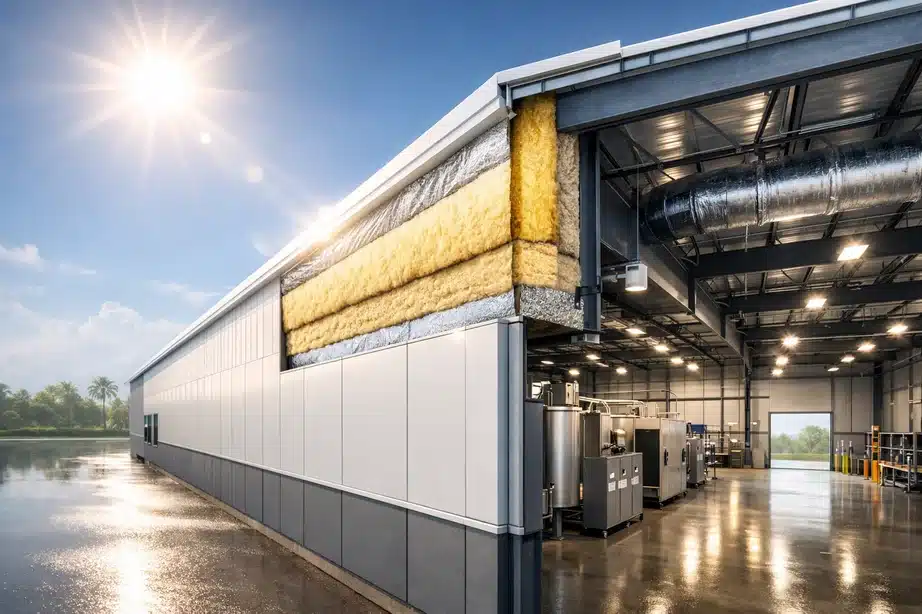
Traditional single-layer fiberglass insulation systems are being replaced with multi-layer assemblies that combine high-R-value batts, vapor barriers, and facings engineered for Houston’s humidity.
What’s New in 2025:
- R-30+ insulation packages for metal roofs and walls.
- High-performance vapor barriers that prevent condensation and “roof sweating.”
- Reflective facings that double as radiant barriers to reduce heat load.
Why It Matters:
Better insulation equals lower HVAC costs, fewer condensation issues, and a more stable interior environment — critical for manufacturing, warehousing, and food storage facilities.
ROI Window: 3–5 years (often faster with energy incentives).
Case in Point:
A logistics center in the Houston Ship Channel area upgraded to a two-layer insulation system with reflective facing. After the retrofit, cooling costs dropped by 26%, and the facility qualified for a Section 179D tax deduction for energy efficiency improvements.
Learn more about metal building insulation upgrades available through Metalguard.
Trend #2: Reflective & “Cool Roof” Systems
Houston’s summer heat makes roof surface temperature one of the biggest drivers of energy consumption. Reflective roof coatings, also called “cool roofs” are rapidly becoming a 2025 must-have.
What’s New in 2025:
Silicone and elastomeric coatings with 90%+ reflectivity.
Advanced pigments that maintain color and reflectivity over time.
Seamless application systems compatible with existing metal roofs.
Why It Matters:
Cool roofs reflect sunlight instead of absorbing it, keeping rooftop temperatures 20-40°F lower on hot days. That translates to less thermal expansion stress, lower interior temperatures, and reduced HVAC runtime.
ROI Window: 2–4 years.
Case Example:
A Sugar Land distribution facility coated its 80,000 sq. ft. metal roof with a white silicone system. Within one summer, the facility saw a 12% drop in peak energy demand and reported significantly cooler work areas.
Trend #3: Insulated Metal Panels (IMPs)
IMPs are among the fastest-growing materials for both new builds and retrofits. Each panel combines a metal exterior skin, rigid foam insulation core, and finished interior liner.
What’s New in 2025:
- Fire-resistant cores (PIR and mineral wool) for higher safety ratings.
- Color-matched architectural finishes for visual appeal.
- Quick-install retrofit framing systems for existing metal walls.
Why It Matters:
IMPs create a high-performance thermal and moisture barrier that dramatically improves building envelope integrity, ideal for food plants, distribution centers, and cold storage.
ROI Window: 5-7 years, with long-term durability and minimal maintenance.
Trend #4: Roof + Insulation Hybrid Retrofits
A growing 2025 trend is to combine roof restoration with insulation upgrades for a comprehensive building envelope refresh.
By addressing both at once, facility managers:
- Eliminate leaks and condensation.
- Add new reflective coatings for solar control.
- Boost R-value through added insulation thickness.
- Extend roof lifespan by 10-15 years.
Example:
A manufacturing plant in northwest Houston replaced aging roof panels and added an interior insulation retrofit. Result: improved thermal comfort, fewer leaks, and an estimated 32% reduction in annual cooling costs.
This type of project is where Metalguard excels, integrating roof restoration, coating, and insulation work for maximum impact.
Many facility managers across Houston are pairing roof coatings with insulation retrofits to achieve faster ROI and extend building life.
Trend #5: Envelope Tightening & Air Control
As codes evolve, controlling air leakage and vapor drive is becoming a 2025 performance focus. Buildings with leaky seams and poor vapor barriers waste energy and promote condensation, a common issue in Gulf Coast climates.
Modern Solutions Include:
- Air-tight facings and taped seams.
- Continuous vapor barrier membranes.
- Sealed roof-to-wall transitions.
These upgrades not only reduce moisture but also help achieve stable humidity levels in manufacturing and food storage environments.
ROI Window: 3-6 years depending on climate zone and operations.
Trend #6: Smart Sensors & Building Performance Monitoring
Technology is finally catching up with metal building maintenance. 2025 introduces more IoT-connected sensors that monitor roof temperature, interior humidity, and even condensation formation in real time.
Facility managers can now track insulation effectiveness, identify leaks early, and schedule maintenance proactively.
This data-driven approach helps prevent costly downtime and ensures ROI tracking on energy-saving upgrades.
ROI Window: 2-3 years (through proactive maintenance savings).
Trend #7: Sustainable Steel and Solar-Ready Designs
Sustainability is driving material choices across the industry. In 2025, metal building manufacturers are offering:
- Recyclable steel with high post-consumer content.
- Low-VOC paints and sealants.
- Roof structures engineered to support solar PV arrays without additional framing.
These upgrades align with ESG goals and offer potential federal tax incentives for solar and green-building compliance.
ROI Window: 5-10 years depending on system scale.
The 2025 Payback Matrix for Facility Managers
| Upgrade Type | Typical Cost | Average Payback Period | Additional Benefits |
|---|---|---|---|
| Roof Coatings (Cool Roof) | $1.50 – $3.00 / sq ft | 2–4 years | Lower roof temps, extended life |
| Insulation Retrofit (Interior) | $1.50 – $4.50 / sq ft | 3–5 years | Energy savings, condensation control |
| IMPs (Walls/Roof) | $8.00 – $15.00 / sq ft | 5–7 years | Improved envelope integrity |
| Roof + Insulation Combo | $10.00 – $20.00 / sq ft | 4–6 years | Full system performance |
| Smart Sensor Systems | $2,500 – $5,000 per building | 2–3 years | Early leak detection, lower maintenance |
| Solar-Ready Roof Upgrades | Variable | 5–10 years | Tax credits, renewable energy offset |
By combining these improvements strategically, especially roof coatings + insulation retrofits, you can reduce total facility operating costs by 20-35% annually.
Mini Case Examples
Warehouse Retrofit – North Houston
Problem: Rising summer cooling costs and persistent condensation.
Solution: Interior insulation retrofit with vapor barrier sealing and white reflective facing.
Result: 24% lower cooling bills and improved comfort for warehouse staff.
Food Processing Facility – Sugar Land
Problem: Temperature swings affecting refrigeration zones.
Solution: Exterior re-insulation and reflective roof coating system.
Result: Stabilized indoor temperature range and extended roof life by 12 years.
Distribution Center – Baytown
Problem: Leaking seams and high humidity inside loading bays.
Solution: Roof restoration with seam sealant and insulation banding retrofit.
Result: Stopped leaks, improved humidity control, and reduced maintenance calls by 40%.
2025 Metal Building Trends FAQs
Get Your 2025 “Trend-Readiness” Walk-Through
If your building’s insulation, roof, or envelope hasn’t been updated in the last decade, now is the time to evaluate your options.
📞 Call Metalguard today or schedule a free 2025 trend-readiness assessment.
Our experts will inspect your insulation, roof coatings, and panel assemblies, then provide:
- A detailed performance report
- Retrofit vs. replacement recommendations
- Payback analysis for energy improvements
Start 2025 with a plan that saves energy, reduces costs, and strengthens your building for years to come.
